DISCUSSION
Will layaway programs go away for good (or bad)?
Written by RetailWire Staff
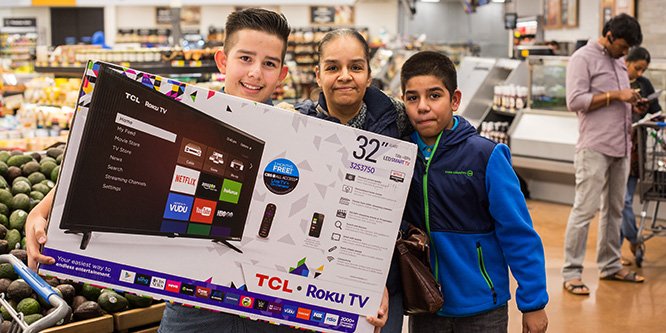
Photo: Walmart
Before credit cards became ubiquitous, layaway was a popular method for letting customers purchase high-price products without having cash on hand. While less utilized than they once were, layaway programs have remained an option at major retailers — though one of the biggest forces in retail is now getting rid of theirs in favor of a different model.
With the 2021 holiday season approaching, Walmart has announced the end of its layaway option, according to Business Insider. The program is being replaced with a buy now, pay later (BNPL) financing service in partnership with provider Affirm. The retailer, which first partnered with Affirm in 2019, was already phasing out layaway last year, allowing it only for some jewelry purchases. The BNPL lets customers bring home purchases immediately and pay for them in installments. Unlike a fee-free layaway program, it can carry an annual percentage rate of 10 percent to 30 percent.
Walmart is part of a shift by major retailers to implement BNPL financing. Retailers and consumer-direct brands, including Best Buy, Macy’s, Nike and Sephora, all offer BNPL options. Apple has been offering a BNPL option in Canada and Amazon.com launched a BNPL checkout option for purchases of more than $50 on its platform.
While layaway — whereby customers do not receive their purchase until they have made all their payments — may look like a dinosaur in a get-it-now world, the model has maintained popularity.
Thirty-three percent of customers as recently as 2018 were planning to use layaway to purchase their holiday gifts, according to PYMNTS. While the model had all but disappeared by the early ’00s, the subsequent financial crises of that decade prompted major retailers to bring it back. Walmart, which had previously killed off its layaway offering in 2006, brought it back in 2011. A distrust of credit cards and their propensity to allow overspending are among the reasons that customers choose layaway.
Some have suggested that the advent of installment plan-based payment methods is an attempt to capture younger, student debt-encumbered customers. Such services are also proliferating in the wake of a 2010 law, which made it more difficult for people under the age of 21 to get a credit card.