Rose Anthony
Through a special arrangement, presented here for discussion is a summary of a current article from the bi-monthly e-zine, CPGmatters.
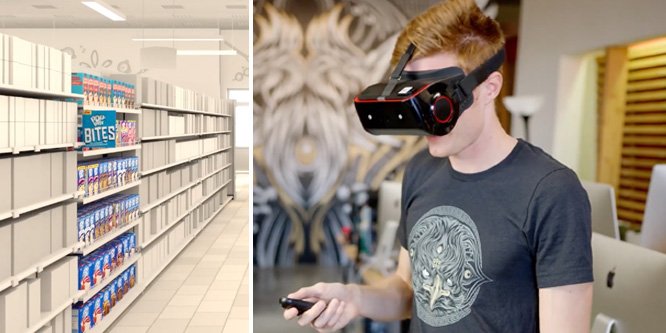
The Kellogg Co. last November partnered to pilot a solution that embeds eye-tracking technology in a mobile virtual reality (VR) headset to reinvent how brands and retailers gather critical consumer data at the store level.
Accenture and technology provider Qualcomm collaborated on the effort.
Conducted with the launch of Kellogg’s Pop-Tarts Bites product, the VR solution demonstrated that optimal placement for the new product was on lower shelves rather than on higher shelves, which conventional testing indicated was where consumers expected to find new products. The result was an 18 percent increase in brand sales during testing.
In a statement, Raffaella Camera, global head, innovation & market strategy, Accenture Extended Reality, said the mobile VR eye-tracking solution provided far deeper behavioral data than standard testing, which typically relies on online surveys and in-home user tests. She said, “It allows significant new insights to be captured while consumers shop by monitoring where and how they evaluate all products across an entire shelf or aisle. Ultimately, this enables product placement decisions to be made that can positively impact total brand sales, versus only single product sales.”
Among the potential benefits from the technology:
- Expanding testing reach to diverse locations: Geographically dispersed consumers can use mobile VR headsets for product testing in their homes, at stores, during product roadshows or at any large consumer gatherings.
- Improving experience in branded environments: Shoppers can walk through realistic and branded virtual store models, look at shelves at their discretion, pick up and examine products and place selections directly into their carts.
- Increasing the dataset for analytics: Insights into in-store behavior insights — such as which products attract attention, where consumers look first or gaze longest and what helps to trigger buying decisions —- can be gathered without interrupting the shopping experience.
- Decreasing costs while improving flexibility: A VR environment enables easy modifications to store and shelf layouts, inventory and prices.